- Published on
Snoot or Die!
- Authors

- Name
- Generosa Litton
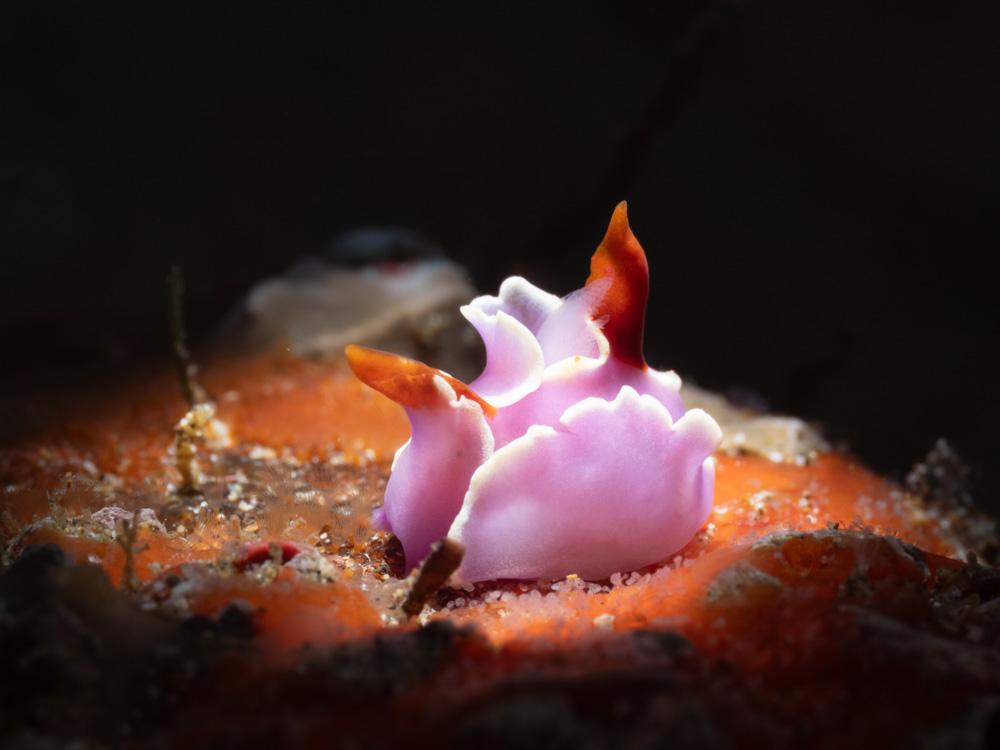 Ornate bat-wing slug
This April 2026, I took a ten-day macro photography workshop with my buddy, Deb Stewart at Crystal Blue Resort in Anilao Batangas. The workshop was led by Mike Bartick and Dan Bishop.
For the first time, I learned how to use a snoot to photograph macro critters. For you non-photographers, a snoot is a cylindrical or conical light modifier attached to a strobe to restrict the light into a focused beam separating the subject from the background. 🔭 🤩
At first, I had a very difficult time focusing the light on the tiny subjects but I was determined to make it work. My mantra: Snoot or die! 💦
By the fifth day of the workshop, thanks to the guidance of our divemaster, Kim, I got the technique down. 👏🏾 👏🏻 👏
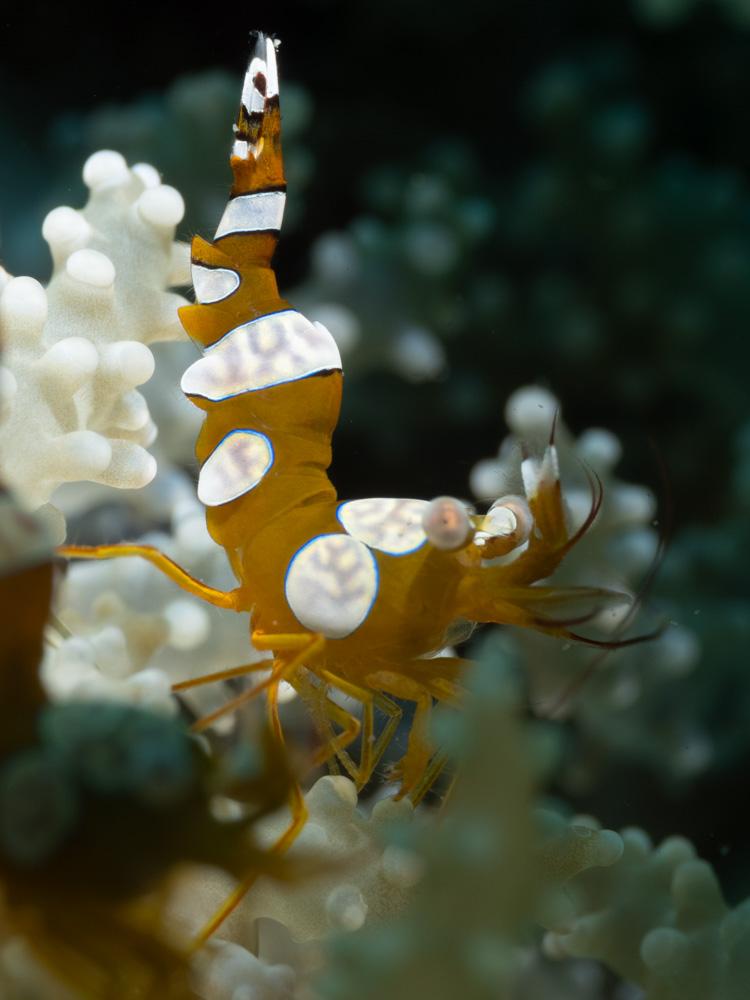 Snooted sexy shrimp
Using the camera's pipper to focus and compose the shot were the overarching themes of the workshop. I didn't know this word, "pipper" which refers to the focus box that you use in the viewfinder to achieve focus on the subject. I gained confidence with moving the pipper prior to shooting the subject to compose the photo.
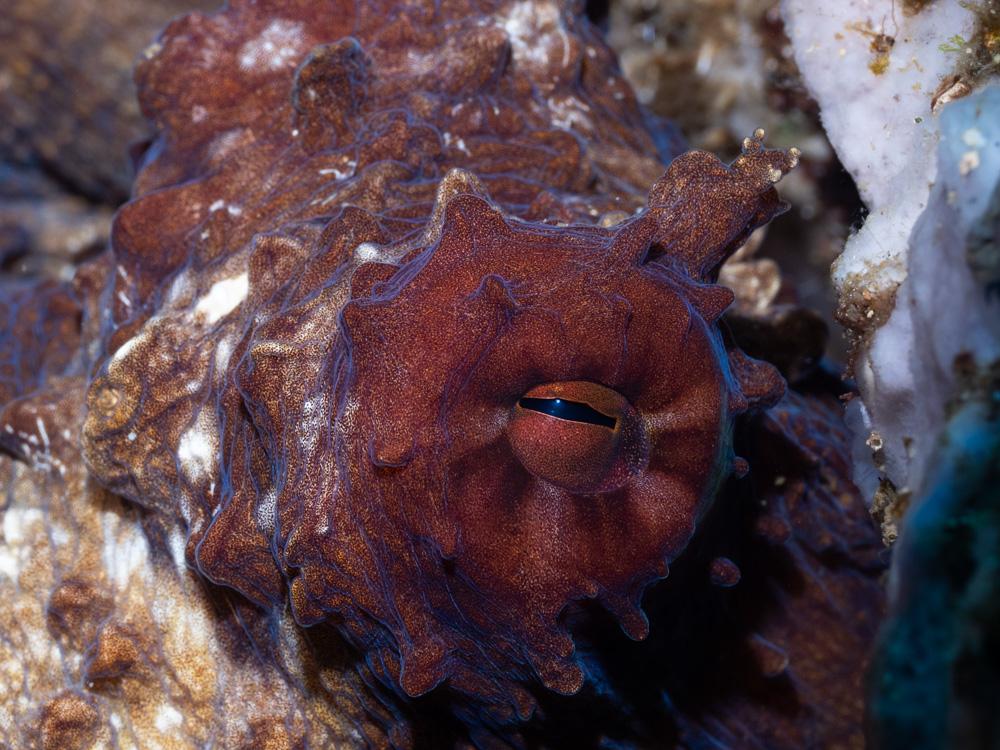
I used the pipper along with the snoot to photograph this octopus hiding in its hole. I was able to aim the snoot's light on its head, focus on its eye and with the depth of field, get the texture of its body.
Other topics that were covered in the workshop besides snooting included creating black and blue backgrounds, using bokeh, and back lighting.
The key to achieving a black background is ensuring that there is nothing behind the subject.
The goby in the photo below was hanging on a coral branch with nothing on the background achieving the desired dark/black background.
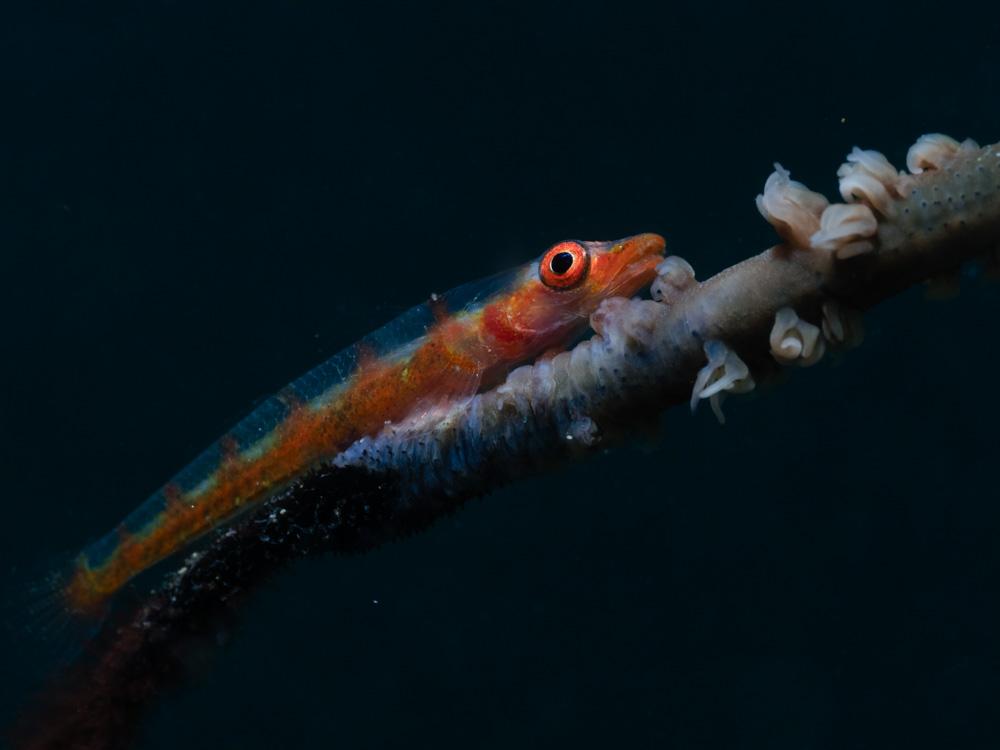 Whip coral goby
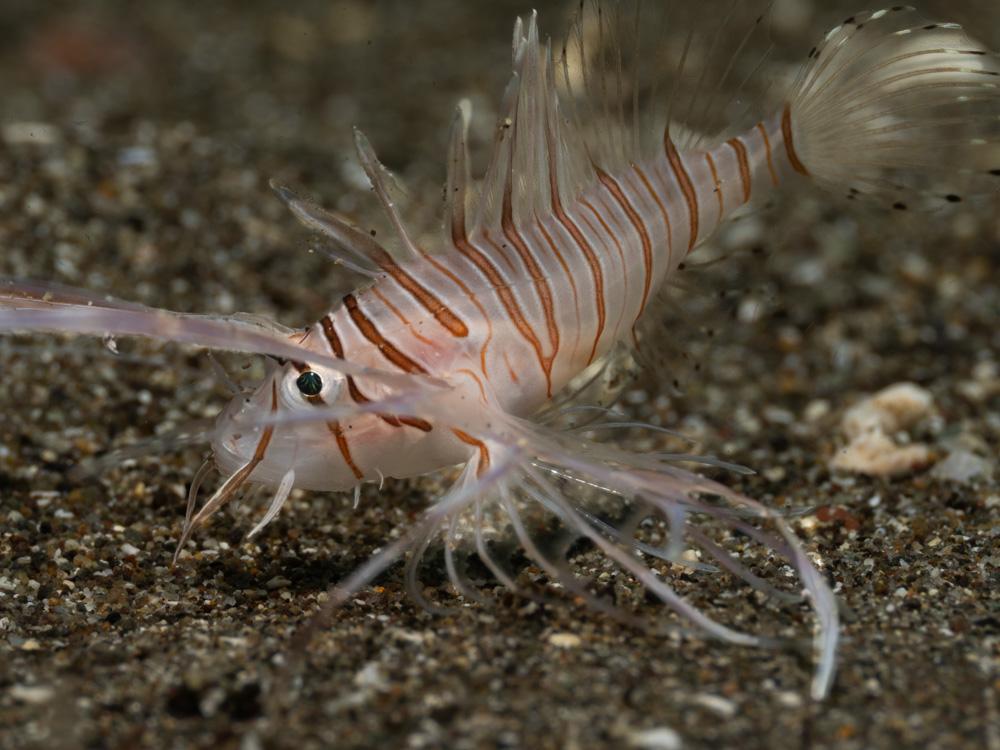
Open apertures adds bokeh and separates the subject from the background. In the lionfish shot below, the background is not very interesting. You can see the bokeh below and behind the subject which makes it pop.
 Juvenile lionfish
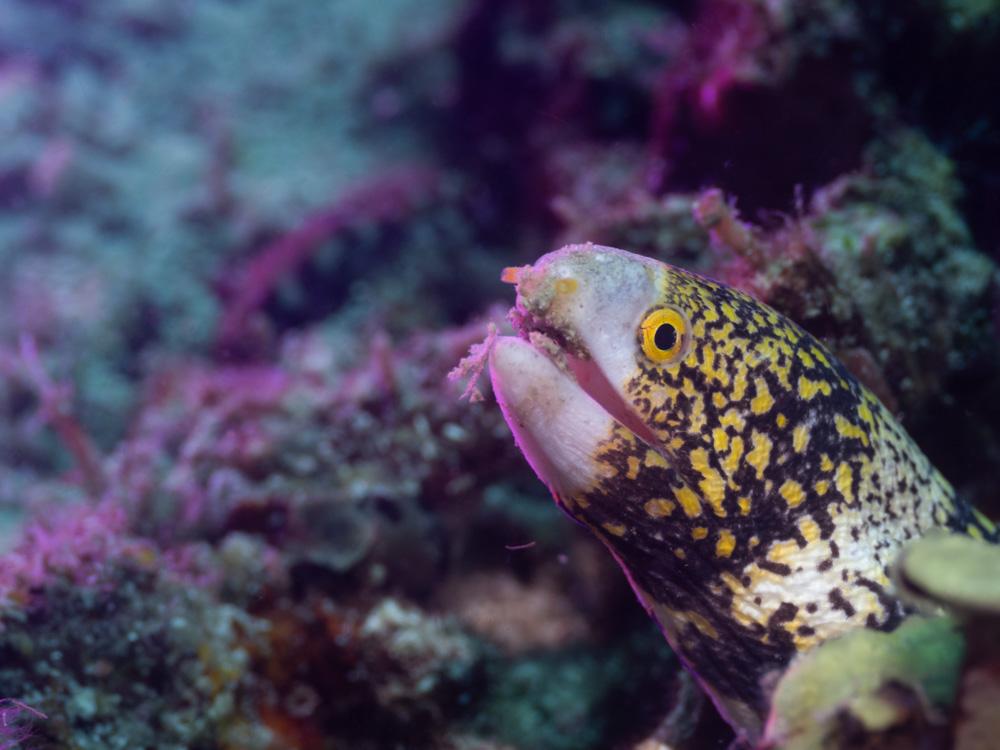
Background lighting was a fun thing to experiment with 🔦. I had my guide, Kim, choose the backlight color on this eel. The purple makes for a cool background. What do you think?
 Snowflake moray eel
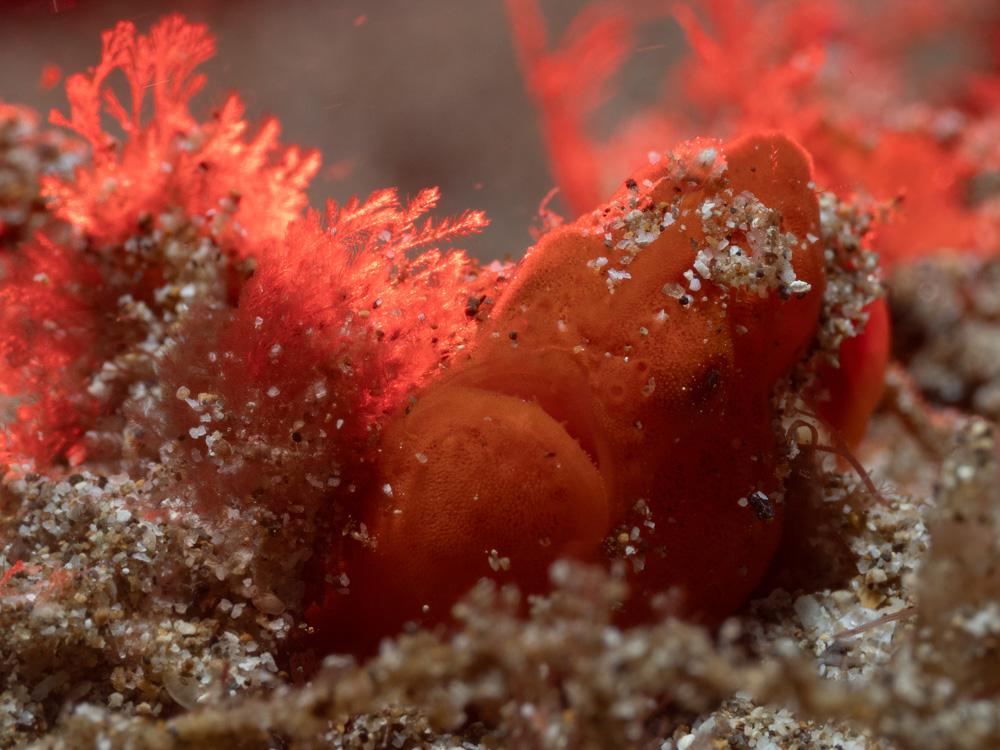
I tried using red background lighting on this orange frogfish to see if I can make its distinguishing characteristics stand out. These critters are usually difficult to spot as they blend very well with the coral and sponges that they hang out in.
 Orange frogfish
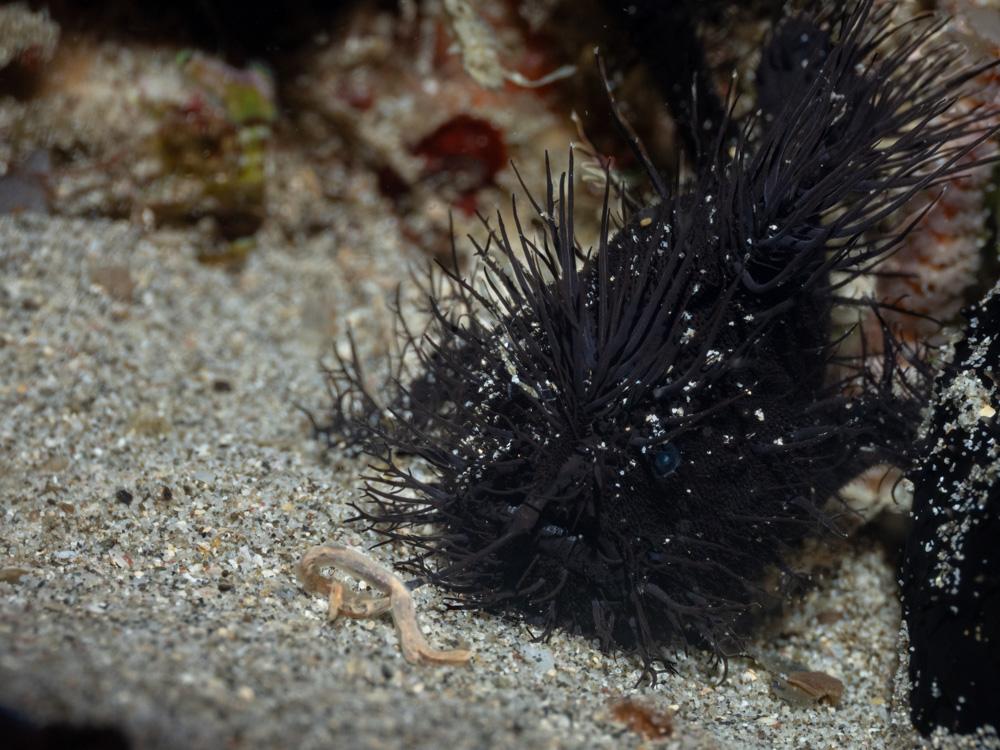
Speaking of frogfish, the most challenging shot I had to take was photographing a black hairy frogfish. It's very challenging to find its eye which was the main focus point. This was the best shot I had. Check out its lure on the sand!
 Black hairy frogfish
Check out my favorite photos here.
I'll definitely be back to try to capture the black hairy frogfish!
Next blog is all about the cool nudibranchs, stay tuned! 🤩